Alberta already owns or administers most provincially controlled natural-resource rights and already regulates much of the oil, gas, electricity, minerals and forestry lifecycle through bodies such as the AER, AUC and Alberta Electric System Operator (AESO). Producers already hold Alberta leases and licences, pay royalties to Alberta and operate under Alberta environmental and safety requirements. The federal role becomes more important when activity crosses provincial or international boundaries, involves federal lands, nuclear/radiological regulation or external trade and treaty interfaces.
That division means the core producing system does not have to be recreated. Wells, plants, pipelines inside Alberta, power markets, royalty systems, field staff and regulatory records remain where they are. The principal transition risk is getting products and inputs across borders and keeping outside operators, lenders, insurers and regulators confident that Alberta permissions remain usable.
The transition gap is concentrated where the activity crosses the present provincial boundary or falls within a federal field. A producing well can keep operating under Alberta law while the legal framework for an interprovincial pipeline, electricity intertie, export authorization or selected federal environmental and nuclear function is transferred or replaced. This distinction matters because it means continuity of production is a different problem from continuity of export corridors. The latter requires agreements and recognition outside Alberta even when the physical pipeline or power line does not move.
Energy has several layers that are often confused. Alberta owns or administers many provincial Crown resource rights; private companies hold leases or licences and drill, mine, generate or process energy; the Alberta Energy Regulator and Alberta Utilities Commission regulate defined activities; the Alberta Electric System Operator coordinates the provincial electricity system; and pipelines or power lines that cross borders depend on additional interjurisdictional rules and counterpart cooperation.
The transition work is concentrated in the legal authority for formerly federal matters, cross-border corridors, export controls, emergency coordination and external recognition.
The energy plan accordingly keeps existing Alberta resource titles, licences and institutions in force, while adding sovereign cross-border, import/export and treaty capacity. Interprovincial and international pipelines, power interties and resource corridors require negotiated or recognized arrangements. The government must also plan for critical imported inputs and market access. In practical terms, the Day 1 of independence objective is not a new energy industry; it is the same industry operating under an Alberta sovereign legal chain with uninterrupted revenue collection and external corridor access.
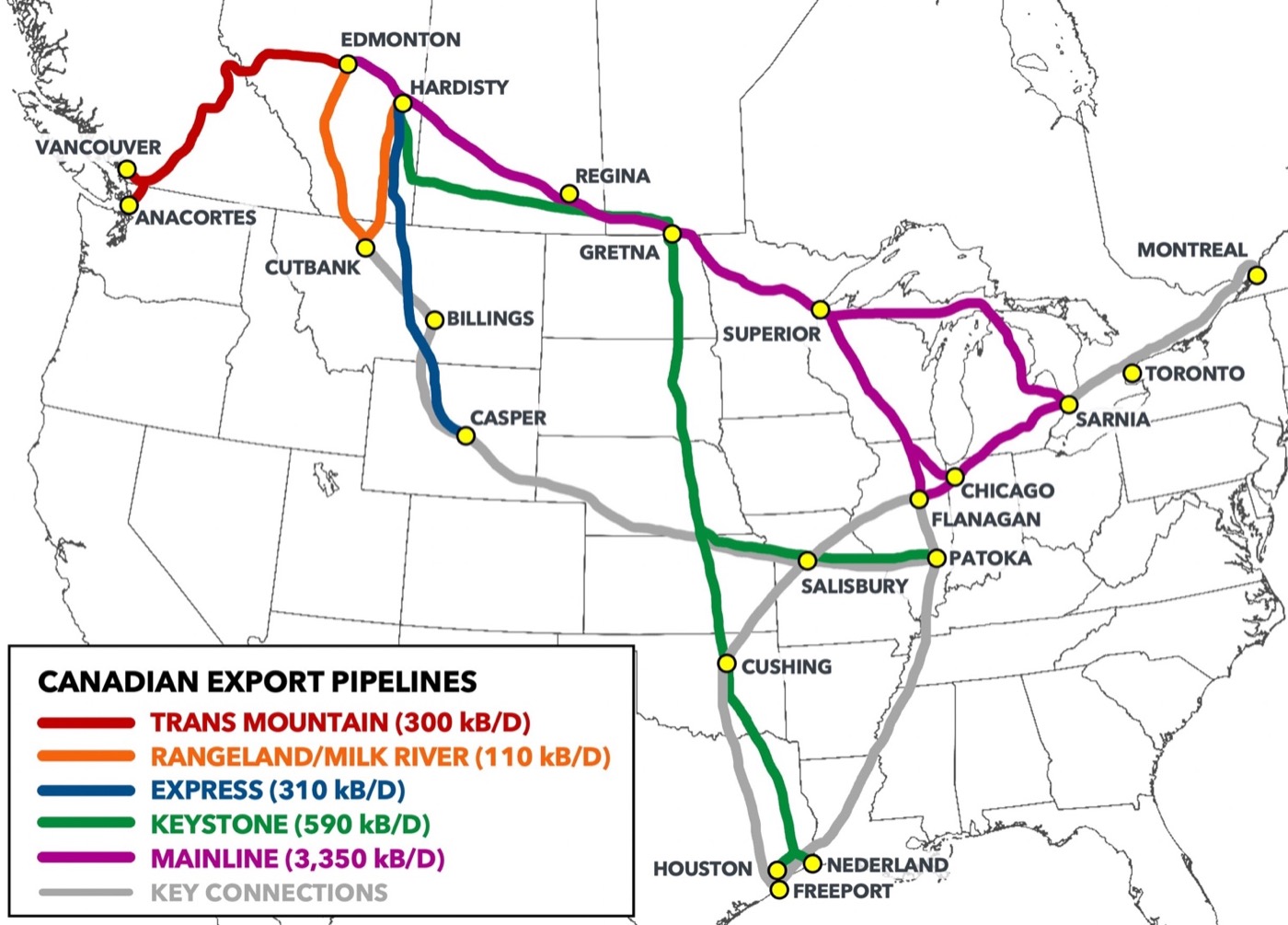
Major pipeline systems moving Western Canadian energy.
16.1 Oil and Gas Regulation
AER licences, approvals, data, safety rules, environmental obligations, land titles and royalty systems should continue with minimal change. Federal approvals affecting interprovincial or international facilities require negotiated transfer, recognition or bridging arrangements.
16.2 Ownership and Control of Natural Resources
Existing Alberta Crown leases and private rights should be preserved to avoid financing and title uncertainty.
16.3 Interprovincial and International Pipelines
Pipeline access is a priority both for Alberta and the regional economies that depend on Alberta’s energy products. The transition agreement should address operating authority, tolls, safety, nominations, inspections, emergency response and continued access to Canadian and U.S. destinations.
16.4 Electricity Generation and Transmission
AESO and existing Alberta market operations provide a strong base. The principal transition need is reliable intertie operation and commercial/regulatory protocols with British Columbia, Saskatchewan, Montana and relevant Canadian/United States reliability bodies.
16.5 Energy Market Integration
Contracts, trading, insurance, banking, price reporting and market data should continue. Market integration is strengthened by maintaining familiar technical standards and providing counterparties with a clear legal basis for Alberta regulatory decisions.
16.6 Resource Export Arrangements
Export licensing and customs documentation should be ready before Day 1 of independence. The supporting research emphasize early technical engagement with the United States because it is Alberta’s largest external market, while also preserving routes through Canada and other markets.
16.7 Environmental Regulation
Existing Alberta environmental approvals, monitoring and enforcement should continue. Federal environmental functions should be mapped by project and statute, with interim recognition or transfer for approvals already in progress.
16.8 Federal Energy Assets and Programs
Federal research facilities, regulatory records, laboratories, program contracts and physical assets in Alberta should be identified in the Debt & Assets register. Operational access may need to be settled before final ownership.
16.9 Cross-Border Energy Cooperation
Energy continuity will remain mutually important to Alberta, Canada and the United States. Technical agreements can focus on safe and reliable flows, emergency coordination, standards, data and dispute resolution.
Selected references from white papers
- Canada Energy Regulator: interprovincial and international pipeline jurisdiction and Canada-U.S. energy-market materials.
- Alberta Energy Regulator: lifecycle regulation of Alberta energy and mineral resource development.
- Alberta Electric System Operator: operation of Alberta’s interconnected electric system and wholesale electricity market.
- Canadian Nuclear Safety Commission: nuclear-energy and nuclear-materials regulatory framework.
- Government of Alberta: forestry, water and natural-resource administration materials.